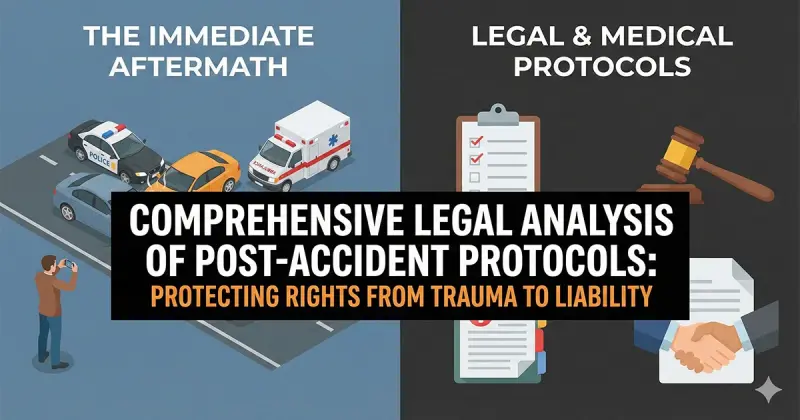
Master post-accident protocols with this comprehensive legal analysis. Learn how to preserve evidence, manage medical claims, and protect your rights against insurers.
Introduction: The Convergence of Trauma and Liability
The phenomenon of the modern motor vehicle accident represents a catastrophic intersection of kinetic energy, human physiology, and complex jurisprudence. For the average motorist, a collision is a momentary event defined by the screech of tires and the crunch of metal. However, within the legal domain, the seconds and minutes following impact initiate a sprawling procedural timeline that can span years. The actions taken in the immediate aftermath—often while the occupants are in a state of neurochemical shock—serve as the foundational architecture for all subsequent legal claims. It is during this chaotic window that the trajectory of a case is determined, deciding whether a victim secures full compensation for their losses or falls prey to the rigorous defensive mechanisms of the insurance industrial complex.
This report serves as an exhaustive treatise on the procedural, strategic, and legal steps required to safeguard one’s rights immediately following a car accident. While the primary objective is to provide actionable intelligence for the layperson—accessible enough for a high school student yet robust enough for legal scrutiny—the underlying analysis delves into the mechanisms of civil liability, the psychology of insurance adjustment, and the evidentiary standards of American tort law. Drawing upon data from legal directories such as Best Attorney US and verified legal protocols, this document deconstructs the post-accident timeline into a series of critical decision points.
The necessity of this analysis is underscored by the adversarial nature of the American legal system. "Protection" in this context is not a passive state but an active, disciplined process of evidence preservation and strategic silence. By understanding the "why" behind each step—ranging from the physics of skid marks to the contract law governing insurance notifications—claimants can navigate the aftermath with the precision of a seasoned litigator.
Part I: The Immediate Scene – Physical Safety and Statutory Obligations
1.1 The Legal Duty to Halt and Remain
The instant a collision occurs, a strict statutory clock begins to tick. Across every jurisdiction in the United States, the operation of a motor vehicle carries with it an implied social contract and a codified legal duty. The most fundamental of these is the duty to stop. Statutes such as the Texas Transportation Code and California Vehicle Code are explicit: a driver involved in an accident resulting in injury, death, or property damage must immediately stop the vehicle at the scene or as close as possible without obstructing traffic more than necessary.
This requirement is not merely a traffic rule; it is a threshold for criminal liability. Fleeing the scene transforms a civil tort (negligence) into a criminal offense (hit-and-run). In states like California, leaving the scene of an accident involving injury can result in felony charges, substantial imprisonment, and the permanent revocation of driving privileges. The legal reasoning here is grounded in public policy: the state has a vested interest in ensuring that injured parties receive aid and that financial responsibility is established before the parties disperse.
The "Move Over" Doctrine vs. Evidence Preservation
A common dilemma arises immediately post-impact: should the vehicles be moved? Traditional wisdom often suggested "freezing the scene" to preserve the geometric arrangement of the vehicles for police analysis. However, modern statutes and safety protocols have shifted this paradigm. "Steer It, Clear It" laws in many states mandate that if a vehicle is drivable and there are no grave injuries, it must be moved to the shoulder or a safe harbor to prevent secondary collisions.
From a legal defense perspective, safety takes precedence over evidence preservation. A plaintiff who stands in the middle of a highway to photograph a bumper, only to be struck by a second vehicle, introduces a complex layer of "comparative negligence" to their claim. The law expects reasonable behavior; risking life for a photo is generally deemed unreasonable. However, if the vehicles are disabled or the crash resulted in a fatality, the scene must remain undisturbed for the coroner and accident reconstruction teams.
1.2 The Physiology of Shock and the "I'm Fine" Trap
Once the vehicle is stationary, the driver’s internal biological response becomes a significant legal variable. The collision triggers an acute stress response, flooding the bloodstream with adrenaline, cortisol, and endorphins. These neurochemicals act as potent analgesics, effectively masking somatic pain signals. A driver may sustain a herniated disc, a concussion, or internal hemorrhaging yet feel lucid and pain-free for hours following the event.
This physiological reality creates a perilous legal trap known as the "Excited Utterance." In the evidentiary rules of most courts, statements made immediately after a startling event are admissible as exceptions to the hearsay rule because they are believed to be unreflective and truthful. Consequently, if a driver tells a police officer, the other driver, or a witness, "I am fine," or "I'm not hurt," that statement is memorialized.
The Insurance Defense of "Delayed Onset"
When the adrenaline subsides 24 to 48 hours later, and the victim wakes up in excruciating pain, the insurance defense counsel will weaponize the initial "I'm fine" statement. They will argue that the injuries complained of did not occur at the scene but were sustained in a subsequent, unrelated event during the intervening days. To counteract this, legal experts advise a disciplined linguistic shift. Instead of a definitive denial of injury, one should use guarded language such as, "I am shaken up and will seek a medical evaluation," or "I have a lot of adrenaline right now, so I cannot be sure".8 This preserves the credibility of future medical claims without committing to a diagnosis at the roadside.
1.3 The 911 Call and the Role of Law Enforcement
Reporting the accident to law enforcement is a critical procedural step that serves two primary functions: compliance with state reporting thresholds and the generation of an official evidentiary record.
Statutory Reporting Thresholds
Most states set a monetary or injury threshold for mandatory police notification. For example:
-
California: Accidents involving injury or death must be reported immediately. Property damage over $1,000 must be reported to the DMV.
-
Texas: Accidents with injury, death, or damage exceeding $1,000 require a police report.
-
New Mexico: Similar mandatory reporting laws apply for severe injury or death.
Failing to report when required can lead to administrative penalties and complicates the insurance process, as carriers often require a police report number (CAD number) to open a liability investigation.
The Police Accident Report as the Anchor Document
The document produced by the responding officer—the Police Accident Report—is often the single most important piece of paper in the early stages of a claim. It provides an objective, third-party account of the incident. Key elements include:
-
Identity Verification: Police have the tools to verify identities and insurance validity, preventing the exchange of false information.
-
Citations: If the officer issues a ticket to the other driver (e.g., for "Failure to Yield" or "Speeding"), this serves as prima facie evidence of negligence.
-
Narrative and Diagrams: The officer’s sketch of the scene and narrative description helps adjusters visualize the liability mechanics.
However, it is crucial to understand that in many civil trials, the police report itself may be considered "hearsay" and inadmissible to prove the truth of the matter asserted, although the officer can testify to their observations. Despite this evidentiary nuance, for the purpose of insurance negotiation, the report is definitive. If the police report blames the other driver, the insurance company typically accepts liability; if the report is ambiguous, the battle for compensation becomes significantly harder.
1.4 The Sovereign Immunity Complexity in Government Collisions
A specialized subset of accidents involves collisions with government vehicles—police cruisers, municipal buses, or highway maintenance trucks. These cases trigger the ancient legal doctrine of Sovereign Immunity, which historically posited that "The King can do no wrong" and thus the government could not be sued.
While modern statutes (such as Tort Claims Acts) have waived this immunity in many car accident scenarios, the procedural hurdles remain high.
-
Notice of Claim: Unlike a standard 2-year statute of limitations, claims against the government often require a "Notice of Claim" to be filed within a very short window—sometimes as brief as 90 days or 6 months.
-
Standards of Liability: In some jurisdictions, if a police officer was responding to an emergency with lights and sirens, a plaintiff may need to prove "reckless disregard" for safety rather than simple "negligence" to recover damages.
This complexity underscores the need for immediate legal identification of the other vehicle. If the other car has a government plate, the timeline for action accelerates dramatically.
Part II: Evidence Collection – The Plaintiff as Investigator
In the modern era, the victim of a car accident must assume the role of a forensic investigator. Law enforcement resources are often stretched thin; officers may not respond to non-injury accidents, or they may produce a "desk report" that lacks detailed investigation. Therefore, the burden of proof falls on the drivers involved.
2.1 The Digital Forensics of Scene Photography
The ubiquity of high-resolution smartphone cameras has revolutionized accident reconstruction. However, taking "pictures of the car" is insufficient. The legal standard requires a comprehensive visual narrative that can withstand cross-examination.
Strategic Photography Checklist:
-
Macro and Micro Damage:
-
Wide Shots: Capture the resting position of all vehicles relative to lane markings. This is critical for "lane dispute" cases (e.g., sideswipes) where both drivers claim to have been in their lane.
-
Close-Ups: Detail the contact points. Paint transfer (one car’s paint on the other’s bumper) can prove the angle of impact.
-
Transient Evidence:
-
Skid Marks: These are ephemeral. Rain or traffic will erase them quickly. Their length and density allow physicists to calculate the minimum speed of the vehicle prior to braking.
-
Debris Fields: The location of shattered glass or plastic indicates the exact Point of Impact (POI) on the roadway.
-
Environmental Context:
-
Traffic Control Devices: Photograph the traffic light to show it was operational. If a stop sign was obscured by an overgrown bush, photograph the obstruction; this may implicate the municipality for poor maintenance.
-
Weather and Road Conditions: Wet pavement, sun glare, or potholes should be documented to contextualize driving behavior.
-
The Parties:
-
Injuries: Visible lacerations, bruising, or airbag burns on oneself and passengers.
-
The Other Driver: Discretely capturing the other driver’s behavior can be relevant if they appear intoxicated or belligerent.
2.2 Witness Identification and Statements
Witness testimony is the "tie-breaker" in liability disputes. A neutral third party with no financial stake in the outcome carries significantly more weight with a jury than the drivers involved. However, witnesses are a perishable resource; they often leave the scene within minutes once they see that emergency services have arrived.
The Protocol for Witness Interaction:
The priority is to secure contact information (name and phone number) immediately.4 It is not necessary to conduct a full interrogation at the roadside. In fact, doing so can be counterproductive if the witness feels harassed. The goal is to establish a line of communication that an attorney can utilize later to obtain a sworn affidavit or recorded statement. If a witness says, "I saw him run the red light," ask if they would be willing to write that down or repeat it to an officer, but primarily, get their number.
2.3 The Exchange of Information: Compliance vs. Privacy
State laws mandate the exchange of specific data points. The California Department of Insurance and other regulatory bodies emphasize the collection of:
-
Names and Driver's License numbers.
-
Vehicle Identification Numbers (VIN) and License Plates.
-
Insurance Policy numbers and Company names.
Privacy Considerations:
While one must provide this information, one is not obligated to allow the other driver to photograph one's driver's license if uncomfortable, provided the information is written down accurately. However, in practice, exchanging photos of documents is the standard for accuracy. It is crucial to avoid discussing the accident details during this exchange. The conversation should be limited to the logistical transfer of data. Any extraneous conversation ("I didn't see you," "I was in a rush") creates a risk of an admission against interest.7
Part III: Medical Management – The Medical-Legal Nexus
The medical management of a car accident victim is inextricably linked to the legal viability of their claim. In the calculus of personal injury law, if an injury is not documented by a medical professional, it legally does not exist.
3.1 The "Gap in Treatment" Defense
Insurance adjusters are trained to look for the "Gap in Treatment." This refers to the time elapsed between the accident and the claimant's first medical interaction.
-
0-24 Hours (The Gold Standard): Seeking care immediately (ER or Urgent Care) creates a contemporaneous medical record. The temporal proximity makes it nearly impossible for the defense to argue the injury came from another source.
-
2-7 Days (The Gray Zone): Delays of a few days are often explained by work schedules or the "wait and see" approach, but they open the door to skepticism.
-
7+ Days (The Danger Zone): A delay of more than a week allows the insurance company to argue Intervening Cause. They will suggest the injury occurred during a weekend sport, a work incident, or a domestic chore, rather than the car crash.
Therefore, the most protective legal action is to proceed directly from the accident scene to a medical facility. This applies even if the injuries feel minor. A physician’s note diagnosing "muscle spasms" or "contusions" anchors the claim in medical fact.
3.2 Medical Adherence and Mitigation of Damages
The legal duty of a plaintiff does not end with the first doctor's visit. There is a legal concept known as the "Duty to Mitigate Damages." This doctrine holds that an injured party must take reasonable steps to improve their condition. If a doctor prescribes physical therapy and the patient fails to attend, the defense can argue that the patient’s continued pain is self-inflicted due to non-compliance.
The "Pain Journal" Strategy:
To bridge the gap between clinical notes and the subjective experience of pain, legal experts recommend keeping a "Pain Journal".8 This daily log should document:
-
Pain levels on a 1-10 scale.
-
Specific functional limitations (e.g., "Unable to lift my toddler," "Cannot sit at desk for more than 20 minutes").
-
Sleep disruptions and emotional states.
This journal transforms abstract "pain and suffering" into concrete, dated evidence that can be presented to a jury or adjuster to justify non-economic damages.
3.3 Traumatic Brain Injury (TBI) and Latent Injuries
Special attention must be paid to injuries that do not present immediate external symptoms. Traumatic Brain Injuries (TBIs) and concussions can occur even without a direct blow to the head, simply from the violent "coup-contrecoup" motion of the brain inside the skull during impact. Symptoms like memory fog, irritability, and photosensitivity may take days to manifest. Without an initial neurological evaluation, these symptoms may be dismissed by insurers as unrelated psychological issues rather than organic brain trauma.
Part IV: The Insurance Adversary – Strategy and Counter-Strategy
Navigating the insurance claim process is an adversarial negotiation disguised as customer service. It is imperative to distinguish between First Party claims (your own insurer) and Third Party claims (the at-fault driver's insurer).
4.1 Notification Requirements and Contractual Duties
Every auto insurance policy contains a "Notification Clause" or "Cooperation Clause." This contractually obligates the policyholder to notify their insurer of any accident within a reasonable time (often defined as "promptly" or within a set number of days). Failure to do so can theoretically constitute a breach of contract, allowing the insurer to deny coverage.
-
Action: Notify your own carrier immediately. Provide the basic facts: date, time, location, and that an accident occurred.
-
Caution: Even with one's own company, stick to the facts. If Uninsured Motorist (UM) coverage comes into play, your own company effectively becomes the adversary, assuming the shoes of the at-fault driver.
4.2 The Third-Party Adjuster and the Recorded Statement
The at-fault driver's insurance adjuster has a fiduciary duty to their shareholder to minimize payouts. They are not advocating for the victim. A primary tool in their arsenal is the Recorded Statement.
-
The Trap: An adjuster calls within 24 hours, sounding sympathetic, and asks for a recorded account "just to set up the claim." They then ask leading questions: "How fast were you going?" "Did you see the other car before impact?" "Are you in pain right now?"
-
Legal Standing: In most jurisdictions, a claimant has no legal obligation to provide a recorded statement to the third-party insurer.
-
Protective Action: Politely decline. "I am not comfortable giving a recorded statement at this time. I will provide a written statement later," or "Please direct all questions to my attorney". This prevents the creation of audio evidence that can be cross-referenced for minor inconsistencies later.
4.3 The "Swoop and Settle" Tactic
Insurers often employ a strategy known as "Swoop and Settle" (or "Snap Settlement"). They analyze the accident, realize their driver is at fault and the damages could be high, and immediately offer a small, quick payout—perhaps $500 or $1,500 plus immediate medical bills.
-
The Release of Liability: Attached to this check is a document called a "Release of All Claims." Signing this document legally extinguishes the right to ever sue for this accident again.
-
The Risk: If the victim discovers a week later that they need a $50,000 spinal fusion surgery, the $500 settlement acts as a total bar to recovery.
-
Rule: Never accept a settlement offer until Maximum Medical Improvement (MMI) is reached. MMI is the clinical point where the condition has stabilized, and the long-term prognosis (and cost) is known.
Part V: Digital Surveillance and Social Media Discipline
In the 21st century, the defense investigation begins online. Insurance companies utilize sophisticated software to scrape social media platforms (Facebook, Instagram, TikTok, Twitter) for data on claimants.
The "Facebook Defense"
A claimant alleges severe back pain and depression following a crash. However, their Instagram feed shows a photo of them at a birthday party two weeks post-accident, smiling.
-
Interpretation: The defense will present this to a jury to argue that the plaintiff is a fraud or is exaggerating their injuries. "Look at the plaintiff dancing/smiling; how hurt can they be?"
-
Context Removal: The photo does not show that the plaintiff took maximum-dose painkillers to attend the party and spent the next two days in bed. However, the visual impact destroys credibility.
-
Action: Legal counsel universally advises a "Social Media Blackout." Do not post about the accident. Do not post photos of the car. Do not post "I'm okay" updates. Ideally, suspend activity on public accounts entirely until the case resolves.
Attorney Shield and Tech Solutions
New technologies like the Attorney Shield app act as a digital buffer during police interactions. These services allow a user to video-call an attorney instantly during a traffic stop or accident scene. The attorney speaks to the officer, ensuring that the user does not inadvertently waive rights or admit fault.13 This represents a modernization of legal counsel, bringing the lawyer to the roadside virtually to prevent the "excited utterances" described earlier.
Part VI: The Role of Professional Legal Representation
While minor "fender benders" with no injuries can be handled pro se, accidents involving bodily injury necessitate professional representation. The complexity of establishing "proximate cause," calculating "future loss of earning capacity," and navigating "subrogation liens" from health insurers is beyond the scope of general knowledge.
6.1 The Value Proposition of Counsel
Studies consistently show that represented plaintiffs recover significantly more in damages than unrepresented individuals, even after accounting for attorney fees.
-
Best Attorney US: Platforms like Best Attorney US serve a critical vetting function. Not all lawyers specialize in personal injury. A generalist who handles wills and real estate may not know the nuances of "collision reconstruction physics" or "soft tissue injury valuation." Using a directory to find a verified, top-rated specialist ensures the claimant is matched with an advocate who understands the local judiciary and insurance landscape.
6.2 Contingency Fees: Access to Justice
The cost barrier is removed by the Contingency Fee model. Personal injury attorneys typically work on a "no win, no fee" basis, taking a percentage (standardly 33.3% to 40%) of the final settlement.2 This structure aligns the interests of the client and the lawyer; the lawyer only gets paid if they maximize the recovery. It allows an indigent victim to hire a high-powered legal team to fight a multinational insurance conglomerate.
6.3 Statutes of Limitation: The Ticking Clock
Finally, every claim is bounded by a Statute of Limitations. This is a hard deadline set by state legislature. If a lawsuit is not filed before this date, the claim is extinguished forever, regardless of its merit.
-
Variability:
-
California: 2 years for personal injury.
-
Mississippi & Arkansas: 3 years.
-
Government Claims: Often 6 months or less.10
Legal counsel ensures these critical deadlines are calendared and met, preventing technical forfeiture of the case.
Detailed Action Protocols
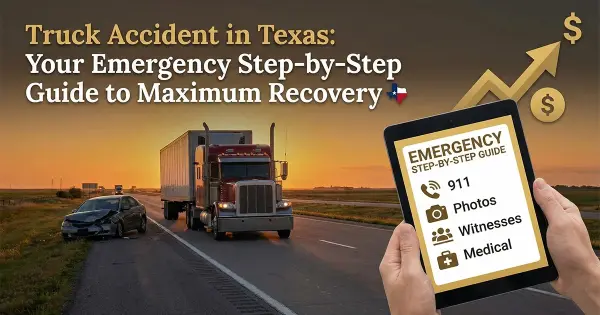
Table 1: Immediate Scene Response Protocol
| Timeframe |
Action Item |
Legal Rationale |
| 0-2 Minutes |
Stop & Assess |
Complies with statutes like TX Transp. Code § 550.021; prevents criminal liability. |
| 2-5 Minutes |
Safety Check / 911 |
Establishes official record; medical triage. |
| 5-15 Minutes |
Photo Documentation |
Preserves transient evidence (skid marks) before scene contamination. |
| 15-30 Minutes |
Witness Exchange |
Captures unbiased testimony before witnesses disperse. |
| Post-Scene |
Medical Evaluation |
Creates "medical-legal nexus" to defeat "gap in treatment" defense. |
Table 2: Comparative Analysis of Mistakes to Avoid
| Common Mistake |
Consequence |
Correct Legal Action |
| Apologizing ("I'm sorry") |
Admissible as admission of liability (Fault). |
"Are you okay?" (Human concern without legal admission). |
| Delaying Medical Care |
"Gap in Treatment" leads to causation denial. |
Immediate ER/Urgent Care visit, even for minor pain. |
| Recorded Statement |
Adjuster extracts damaging soundbites. |
Refuse statement until counsel is retained. |
| Social Media Posting |
Contradicts injury claims; destroys credibility. |
Total social media silence regarding event/health. |
| Quick Settlement |
Waives right to future compensation for unknown injuries. |
Reject all offers until Maximum Medical Improvement (MMI). |
Part VII: Common Pitfalls and Strategic Errors
The trajectory of a legal case is often determined not by the brilliance of the arguments made in court, but by the unforced errors committed by the plaintiff in the early stages. The following section details the most prevalent mistakes, as identified by legal professionals, and provides the strategic framework to avoid them.
7.1 The "Apology" Paradox
Social conditioning dictates that when an accident occurs, polite individuals apologize to diffuse tension. "I'm so sorry, I didn't see you stop," or even a generic "I'm sorry about this."
-
Legal Consequence: In a civil deposition, the opposing counsel will ask, "Did you apologize at the scene?" If the answer is yes, it will be framed as an admission of guilt. While some states have "apology statutes" that make benevolent gestures inadmissible to prove liability, many do not.
-
Correct Protocol: Check on the welfare of others without discussing the mechanics of the crash. "Is everyone in your car okay?" is permissible. "I was distracted" is fatal.
7.2 The Failure to Preserve Evidence (Spoliation)
Spoliation refers to the destruction or alteration of evidence. This can happen inadvertently.
-
Scenario: A driver’s car is totaled. The insurance company tows it to a salvage yard. The car is crushed (scrapped) a week later. Subsequently, the driver realizes the accident was caused by a brake failure or a defective airbag.
-
The Problem: The evidence (the car) is gone. Proving a product liability case is now impossible.
-
Solution: If there is any suspicion of mechanical failure, or if the injuries are catastrophic, the attorney must send a preservation letter to the tow yard and insurer immediately to halt the destruction of the vehicle.
7.3 Underestimating Uninsured Motorists (UM/UIM)
A staggering percentage of drivers are uninsured or carry state-minimum limits (e.g., $15,000 or $25,000). If a victim suffers $100,000 in medical bills but the at-fault driver only has $25,000 in coverage, the victim is left with a $75,000 deficit.
-
The Role of UM/UIM: Uninsured/Underinsured Motorist coverage is a policy add-on that protects the policyholder in this exact scenario.
-
The Pitfall: Many drivers do not realize they have this coverage or are afraid to use it for fear of rate hikes.
-
Legal Reality: In most states, using UM/UIM coverage for a not-at-fault accident is protected and should not result in punitive rate increases. It is a critical safety net that must be triggered by filing a claim with one's own insurer immediately.
Part VIII: Determining Damages – What is the Case Worth?
To protect one's rights, one must understand what those rights entitle them to. In tort law, the goal is to make the plaintiff "whole" again. This is achieved through Damages.
8.1 Economic Damages (Special Damages)
These are objectively quantifiable financial losses.
-
Medical Expenses: Past bills (ambulance, ER, imaging) and future estimated costs (surgeries, lifelong therapy).
-
Lost Wages: Actual income lost during recovery.
-
Loss of Earning Capacity: If a construction worker suffers a back injury and can only work a desk job for half the pay, the difference in lifetime earnings is recoverable.
-
Property Damage: Repair or replacement value of the vehicle and personal property (broken glasses, laptops, car seats). Note: Car seats involved in a moderate to severe crash must be replaced, and insurers are obligated to cover this cost.
8.2 Non-Economic Damages (General Damages)
These are subjective and argued based on the "Pain Journal" and witness testimony.
-
Pain and Suffering: The physical agony and discomfort.
-
Emotional Distress: Anxiety, PTSD, fear of driving.
-
Loss of Consortium: The impact of the injury on the victim's relationship with their spouse (loss of companionship, intimacy, and household support).
-
Loss of Enjoyment of Life: The inability to participate in hobbies or life events (e.g., a marathon runner who can no longer run).
The documentation gathered in the first 24 hours—the photos of the bruise, the diary entry about not being able to sleep, the witness statement about the severity of the impact—provides the evidentiary foundation for every single dollar of these damages.
Part IX: The Role of Best Attorney US and Legal Directories
In the fragmented legal market, finding competent counsel is a challenge. The Best Attorney US platform addresses this by aggregating data on attorneys, verifying their licensure with State Bar Associations, and categorizing them by practice area.
-
Why Verification Matters: "Ambulance chasers" or unqualified generalists can mishandle complex injury claims. A directory that highlights "top-rated" and "verified" attorneys helps users filter for professionals with a track record in tort litigation.
-
Educational Bridge: By offering blogs and guides, these platforms educate consumers before they sign retainer agreements, aligning with the mission of this report: empowerment through knowledge.
Conclusion: The Architecture of Resilience
The aftermath of a car accident is a test of resilience. It demands that an individual, often in a state of physical and emotional distress, execute a series of precise legal maneuvers. The system is not designed to be intuitive; it is designed to be adversarial. Insurance companies, armed with vast resources and legal teams, rely on the ignorance of claimants to minimize liability.
However, the "steps to take" outlined in this report—Stop, Call, Document, Silence, Treat, and Retain Counsel—form a defensive perimeter around the victim's rights. By adhering to these protocols, the claimant transforms from a passive victim of circumstance into an active guardian of their own future. They ensure that the truth of the accident is preserved in evidence, that the severity of the injury is enshrined in medical records, and that their financial recovery is maximized through competent legal advocacy.
In the final analysis, the most effective protection is immediate action. The law helps those who help themselves, and in the context of a car accident, helping oneself means treating the crash scene not just as a traffic event, but as the opening scene of a legal case that must be won.