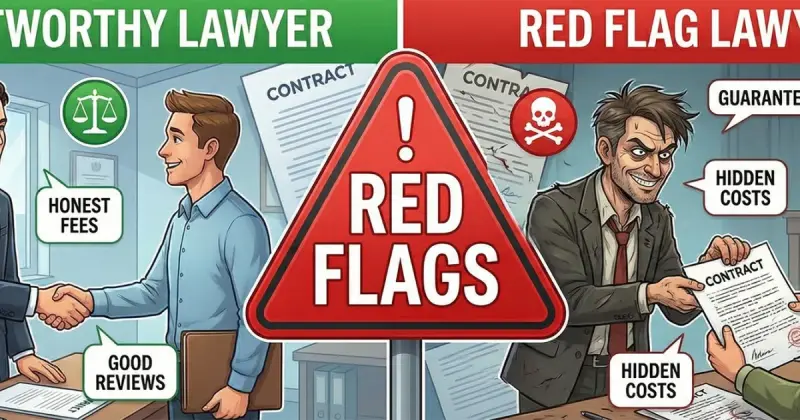
Hiring a criminal defense lawyer? Spot red flags like hidden attorney retainer fees or poor communication. Protect your case with these expert hiring tips
When someone is facing a criminal charge, it can feel like their whole world is crashing down. It is a scary time, and the most important person in your life at that moment is your lawyer. A good criminal defense lawyer is like a shield—they protect your rights and make sure you are treated fairly.
However, not every lawyer is a good one. Just like there are bad mechanics or bad chefs, there are lawyers who might not have your best interests at heart. Since hiring a lawyer is a big decision, you need to know how to spot "red flags" (signs of danger). Here is a guide written in simple English to help you understand what to look out for.
1. Promises of a "Guaranteed" Win
In the legal world, nothing is 100% certain. If a lawyer looks at your case for two minutes and says, "Don't worry, I guarantee we will win," you should be very careful. A top-rated professional like attorney moin choudhury knows that judges and juries are unpredictable. A good lawyer will tell you the truth about the risks, not just tell you what you want to hear to get your money.
2. Confusion Over the Money (The Retainer Fee)
Before a lawyer starts working, they usually ask for an attorney retainer fee. This is like a down payment. You pay this money upfront, and the lawyer takes their hourly pay from it. A red flag is when a lawyer cannot explain exactly how this money will be used.
You should always ask:
-
How much is the initial fee?
-
What happens when the money runs out?
-
Do I have an attorney on retainer for the whole case or just for the first few weeks?
If they are vague about the money, they might send you a massive bill later that you didn't expect.
3. Lack of Specialization
Law is a huge field. Some lawyers spend their time doing attorney document review jobs, where they sit in an office and read thousands of pages of contracts. Others might specialize in property, helping people with an attorney quit claim deed to transfer house ownership.
If you are facing a criminal charge, you do not want a "paperwork" lawyer. You want someone who is in the courtroom every day. If a lawyer tells you they do "a little bit of everything," that is a red flag. You need a specialist who knows criminal law inside and out.
4. Not Explaining "The Secret Rule" (Privilege)
In most cases, what you tell your lawyer is a secret. This is called "attorney-client privilege." However, there are attorney client privilege exceptions. For example, if a client tells a lawyer they are going to hurt someone in the future, the lawyer might have to speak up.
If you are in the West, you should ask about attorney client privilege california rules (or the rules of your specific state). A red flag is a lawyer who doesn't explain these rules clearly. You need to know exactly what is private and what isn't before you start talking.
5. Bad Reviews and Reputation
Just like you check reviews before buying a new phone, you must check attorney reviews by clients. If you see a pattern where people say the lawyer never calls them back or was rude, believe them.
You should also check with the attorney registration and disciplinary commission. This is a government group that keeps track of lawyers who break the rules. If a lawyer has been in trouble for lying or stealing from clients, their name will be on that list. Hiring someone with a bad record is a huge risk.
6. High "Extra" Costs
Some legal services offer protection plans, often called an "attorney shield." While these can be helpful, you need to know the attorney shield cost upfront. If a lawyer keeps adding on "extra fees" for things like making copies or parking at the court, it shows they might be more interested in your wallet than your case.
7. Hiring Someone from Too Far Away
Local knowledge matters. If you are in a specific area, like the 907 area code in Alaska, hiring a 907 attorney is often better than hiring someone from a different state. Local lawyers know the local judges and the local police. A red flag is a lawyer who doesn't know the "vibe" of the local courthouse.
Comparison: Good Lawyer vs. Red Flag Lawyer
| Feature |
Good Lawyer |
Red Flag Lawyer |
| Honesty |
Tells you the strengths and weaknesses of your case. |
Guarantees a win or "special deals" with judges. |
| Communication |
Returns calls within 24–48 hours. |
Ignores your emails for weeks. |
| Fees |
Provides a written contract for the attorney retainer fee. |
Asks for cash only or has no written agreement. |
| Focus |
Specializes in criminal defense. |
Does attorney document review jobs and divorce cases at the same time. |
What to Do If You See a Red Flag
If you are sitting in a consultation and you feel uncomfortable, it is okay to say "No." Remember, you are the boss. You are hiring them to do a job.
If you already have an attorney on retainer and they start acting strangely—like stopping all communication or asking you to sign an attorney quit claim deed that doesn't make sense—you have the right to fire them and find someone else. Your freedom is too important to leave in the hands of someone you don't trust.
Summary Checklist for Students:
-
Check the reviews: Always look for attorney reviews by clients.
-
Check the record: Use the attorney registration and disciplinary commission website.
-
Understand the cost: Know the attorney retainer fee before you sign anything.
-
Verify the specialty: Make sure they aren't just doing attorney document review jobs.
Finding the right lawyer is like finding a good teammate. You want someone who is smart, honest, and ready to fight for you. If you see even one red flag, keep looking. There are plenty of great lawyers out there who will treat you with the respect you deserve.