Injured on a job site? Workers' Comp only pays a fraction of what you need. Learn why you must file a "Third-Party Lawsuit" and send a Spoliation Letter immediately to protect your evidence.
If you work in construction, you know the risks. You work with heavy steel, high voltage, and massive machinery every single day. You also know that when accidents happen on a job site, they aren’t usually minor fender-benders. They are life-changing.
If you have been injured on a job site, your employer or union rep probably told you: "Don't worry, Workers' Compensation will take care of it."
They aren't lying, but they aren't telling you the whole truth, either.
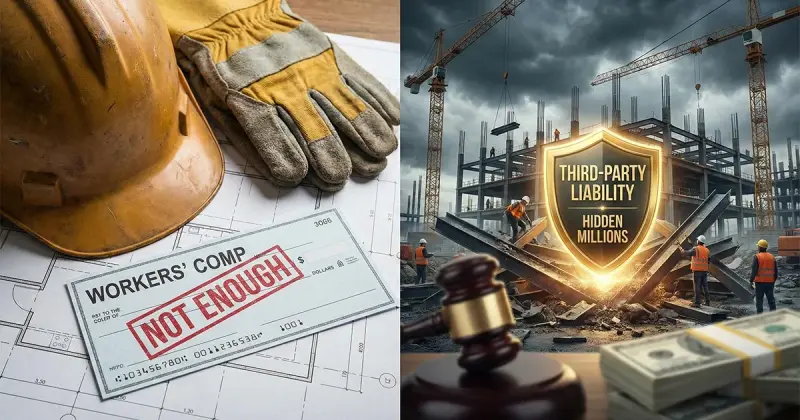
Here is the reality the insurance companies don't want you to know: Workers' Compensation is designed to keep you afloat, not to make you whole. It pays your medical bills and a fraction of your wages, but it pays you zero dollars for your pain, your trauma, or the fact that you might never be able to pick up your kids again.
To get the money you actually deserve—the kind that secures your family's future—you often need to look beyond your employer. This guide explains how top-rated construction attorneys find the "hidden" liability on a job site.
1. The "Grand Bargain" Is a Bad Deal for You
In the United States, we have a legal system called the "Workers' Compensation Bargain." It works like this:
-
The Good News: You don't have to prove your boss made a mistake to get medical benefits. Even if the accident was an accident, you get paid.
-
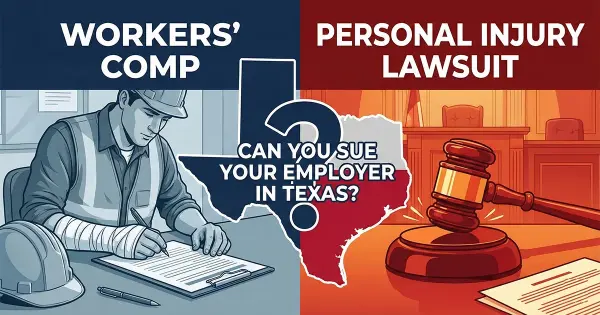
The Bad News: In exchange, you are not allowed to sue your employer.
This protects the company from big lawsuits, but it hurts you. If you lose your leg because your foreman cut corners on safety, Workers' Comp might give you a set amount of money—let's say $75,000 plus medical bills. But in the real world, losing a leg is worth millions in lost quality of life. Workers' Comp completely ignores that "human" cost.
So, how do you bridge the gap between a $75,000 payout and a $2,000,000 settlement? You file a Third-Party Lawsuit.
2. The Secret Weapon: Third-Party Liability
While you generally can't sue your direct employer, a construction site is filled with other companies. If any of them were negligent, you can sue them for full damages—including pain and suffering, which Workers' Comp doesn't cover.
Here is who a specialist attorney looks at first:
The General Contractor (GC)
Even if you work for a subcontractor (like a plumber or electrician), the General Contractor is the "captain of the ship." They are responsible for overall site safety.
-
The Scenario: You trip over a pile of debris left in a hallway and break your back.
-
The Lawsuit: You collect Workers' Comp from your plumbing boss, BUT you also sue the General Contractor for failing to keep the site clean and safe.
The Equipment Manufacturer
Tools break. But sometimes, they break because they were built wrong.
-
The Scenario: You are using a nail gun, and it double-fires, injuring your hand. Or a crane boom snaps under a load it should have been able to handle.
-
The Lawsuit: This is a Product Liability case. You sue the company that built the tool. These companies have massive insurance policies and are strictly liable for selling dangerous products.
The Property Owner
In some states (especially New York), property owners are strictly responsible for injuries involving heights, like scaffold falls. Even in other states, if the owner knew about a dangerous hole in the ground and didn't warn you, they are liable.
3. Gravity Kills: The Truth About Scaffolding Accidents
Falls are the #1 killer in construction (OSHA calls them the "Fatal Four").
When a worker falls off a scaffold, the company almost always tries to blame the worker. They say, "He was clumsy," or "He didn't tie off."
Do not accept this.
Most scaffolding accidents are not human error; they are system failures.
-
Did the planking give way?
-
Did the cross-bracing fail?
-
Was the scaffold erected on soft mud instead of steel plates?
OSHA has very specific rules (Standard 1926.451) about how scaffolds must be built. If the "Competent Person" (the safety manager) failed to inspect that scaffold before your shift, the fall is their fault, not yours. A good lawyer hires structural engineers to prove the scaffold was a death trap before you ever stepped foot on it.
4. Heavy Machinery Has a "Black Box" Too
We often hear about "black boxes" in airplanes, but did you know modern cranes, excavators, and bulldozers often have them too? They are called Electronic Control Modules (ECMs).
If you are struck by a crane or a backing truck, the driver might say, "He jumped out of nowhere!"
The black box tells the truth. It records:
-
How fast the machine was moving.
-
When the brakes were applied.
-
If the operator was jerking the controls erratically.
Warning: The construction company owns this data. They can (and will) delete it if you don't stop them. This leads us to the most urgent step in your case.
5. The "Spoliation Letter": Why You Can't Wait
Construction sites change fast. A hole you fell into today will be filled with concrete tomorrow. The broken ladder you used will be thrown in a dumpster by lunch.
If the evidence disappears, your case disappears.
You need a lawyer to send a Spoliation Letter immediately. This is a formal legal demand that orders the General Contractor and all other companies to freeze everything.
-
They cannot fix the broken rail.
-
They cannot delete the surveillance video.
-
They cannot wipe the crane’s computer data.
If they destroy evidence after getting this letter, the judge can tell the jury to assume the company is guilty. But if you wait two weeks to hire a lawyer, that evidence is likely gone forever legally.
6. Don't Let Them Blame You (Comparative Negligence)
The insurance adjuster's favorite trick is to say, "Well, you weren't wearing your high-vis vest, so it's 50% your fault."
They do this to scare you into taking a small settlement. In many states, even if you were partially at fault, you can still get paid. And often, what looks like "your fault" (like slipping) was actually caused by their negligence (like using the wrong type of gravel on a ramp).
Take Control of Your Future
A construction accident can end your career in a split second. You have spent your life building things for other people; now you need to protect what you have built for your family.
Do not settle for a Workers' Comp check that barely covers the rent.
Browse our directory at Best Attorney USA to find a verified Construction Accident Specialist in your area. These attorneys know the OSHA codes, they know how to get the black box data, and they know how to fight the billion-dollar insurance companies.
Most work on a "No Win, No Fee" basis. It costs you nothing to find out if your case is worth millions more than you think.