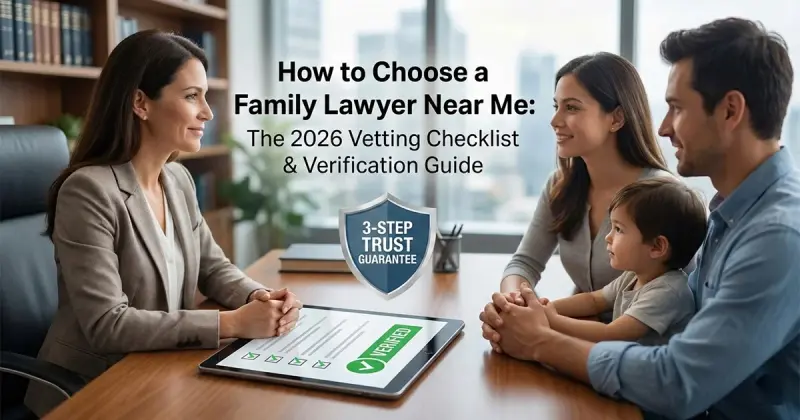
Searching for family lawyers near me? Our 2026 guide covers 7 critical questions, red flags to avoid, and the 3-Step Trust Guarantee to find your attorney
If you are reading this at 2:00 AM, staring at the ceiling and worrying about your future, you are not alone.
Every day, thousands of people type "family lawyers near me" into Google. They aren’t looking for a casual service; they are usually in the middle of a life-changing crisis. Whether it is a divorce, a child custody battle, or a complex adoption, the lawyer you choose will become the architect of your future life.
In 2026, finding a lawyer isn't just about picking the first name in the phone book. The legal landscape has changed. With the rise of AI in law firms, virtual court hearings, and complex new asset laws, you need a partner, not just a paper-pusher.
This guide is your roadmap. We will walk you through exactly how to vet a local attorney, what questions to ask, and how to use the Best Attorney USA verification system to ensure you never hire the wrong person.
Why "Near Me" Matters More Than You Think
When you search for a lawyer "near me," you might think you are just looking for convenience—someone close enough to drive to. But in family law, geography is strategy.
Family law is incredibly local. While state laws cover the big picture (like how property is generally divided), the day-to-day decisions are often made by local judges who have their own specific ways of doing things.
The "Local Court Advantage"
An attorney who practices in your specific county—and is a regular face in that specific courthouse—has a distinct advantage over an outsider.
-
Knowing the Judges: A local lawyer knows that Judge Smith hates it when parents interrupt each other, or that Judge Martinez prefers 50/50 custody arrangements unless there is a major safety issue. This "insider knowledge" allows them to tailor your arguments to the specific person deciding your fate.
-
Procedural Speed: Every county clerk’s office has its own quirks. A local attorney knows exactly how to file paperwork to avoid administrative delays that could leave you waiting months for a hearing.
The Takeaway: Don't just look for a lawyer in your state. Look for one who lists your specific county or city as their primary practice area.
Generalist vs. Specialist: The Danger of the "Door Lawyer"
One of the biggest mistakes people make is hiring a "generalist"—often called a "door lawyer" (meaning they will take any case that walks in the door).
You might have a friend who is a great real estate lawyer, or you might know someone who handled your speeding ticket. Do not hire them for your divorce.
Family law in 2026 is highly specialized. It involves complex tax rules regarding retirement accounts, digital privacy laws regarding social media evidence, and evolving psychology regarding child development. A generalist who handles a DUI on Monday and a will on Tuesday may miss critical updates in family case law, such as the nuances of the "Glover Decision" regarding parenthood.
What to look for:
The 2026 Vetting Checklist: 7 Questions You Must Ask
Once you have a list of potential candidates from the Best Attorney USA directory, you need to interview them. Treat this like a job interview—because you are the boss, and you are hiring them for a very important job.
Schedule a consultation and ask these seven questions. Their answers will tell you everything you need to know.
1. "What is your experience with cases like mine?"
Don't just ask if they have done divorce. If you own a business, ask if they have handled "high-asset business valuation." If you have a special needs child, ask about their experience with "adult child support" or specific custody modifications. You need a match for your specific facts, not a generic resume.
2. "What is your strategy: settlement or litigation?"
Some lawyers are "burners"—they love to fight in court and will rack up huge bills doing so. Others are "builders"—they prefer mediation and settlement to save you money and stress. Neither is wrong, but their style must match your goals. If you want an amicable split, don't hire a "shark." If your ex is abusive and hiding money, don't hire a passive mediator.
3. "Who will actually be working on my case?"
In many large firms, you might meet with a senior partner (the face on the billboard), but your case is actually handled by a junior associate with one year of experience. It is okay for associates to do paperwork to save costs, but you need to know who is driving the bus. Ask specifically: "Will you be the one arguing for me in court?".
4. "How do you handle communication?"
This is the number one complaint against lawyers: they don't call back. In 2026, you shouldn't be chasing your lawyer. Ask them:
-
"Do you have a policy for returning calls/emails (e.g., within 24 hours)?"
-
"Do you use a secure client portal where I can check case status online?".
5. "What is your fee structure?"
Transparency is key. Do not accept vague answers.
-
Hourly Rate: How much per hour?
-
Retainer: How much upfront? (Typically $3,000 - $10,000+).
-
Billable Increments: Do they bill in 6-minute or 15-minute increments? (6-minute is better for you).
-
Hidden Costs: Will you be charged for photocopies, postage, or paralegal time?.
6. "Do you use modern technology?"
This sounds minor, but it matters. An attorney using AI for legal research can find answers in minutes that used to take hours (saving you money). An attorney comfortable with Zoom is essential for virtual hearings, which are now standard for many procedural court dates.
7. "What is the worst-case scenario?"
A honest lawyer will tell you the risks. They might say, "You could lose the house," or "Alimony might be higher than you want." If a lawyer only tells you what you want to hear, run away. You pay for the truth, not a fairytale.
Red Flags: When to Walk Away
While vetting, listen to your gut. If something feels off, it usually is. Watch out for these warning signs:
-
The Guarantee: If a lawyer says, "I guarantee we will win full custody," leave immediately. No lawyer can guarantee a result in family court. It is unethical and dishonest.
-
The Ghost: If they take three days to reply to your initial inquiry, imagine how long they will take when you have an emergency. Responsiveness is a non-negotiable trait.
-
The Aggressor: Avoid lawyers who seem angry or overly aggressive toward the other side just for the sake of it. High conflict increases costs and damages your ability to co-parent later. You want a strategic advocate, not a bully.
-
The Oversharer: If they talk about other clients by name or share messy details of other cases, they will do the same to you. Confidentiality is sacred.
The Best Attorney USA Solution: The 3-Step Trust Guarantee
Vetting lawyers is exhausting. We know that. That is why Best Attorney USA created a system to do the heavy lifting for you. When you search our directory, you aren't just getting a random list of names. You are seeing professionals who have passed our 3-Step Trust Guarantee.
Here is how we protect you:
1. Verified Licenses There are people out there practicing law with suspended licenses or disciplinary records you might not see. We verify the standing of attorneys with their State Bar Associations. When you see a profile on our site, you know they are licensed and in good standing.
2. Real Client Reviews A lawyer's website will only show you glowing testimonials. We aggregate real feedback. We look for the specific keywords that matter: "responsive," "compassionate," "knowledgeable," and "fair." We help you see the truth about what it's like to work with them.
3. Expert Matchmaking Our platform allows you to filter by the things that actually matter to you.
-
Need a Fathers' Rights specialist? We have a filter for that.
-
Need a lawyer who speaks Spanish or Korean? You can search by language.
-
Need someone experienced in High-Asset Divorce? We categorize that. This ensures you aren't wasting time calling lawyers who aren't a good fit for your life.
Preparing for Your First Meeting
Once you have chosen a lawyer to meet, don't show up empty-handed. To get the most out of your (often paid) consultation, bring the "Golden Three" documents:
-
Financial Snapshot: A quick list of what you own (house, cars, 401k) and what you owe (mortgage, credit cards).
-
Timeline: A one-page summary of your relationship—date of marriage, date of separation, and birthdays of children.
-
Income Proof: Your two most recent pay stubs and your last tax return.
Being prepared shows the lawyer you are serious and allows them to give you accurate advice immediately.
Conclusion: Trust Your Instincts
Choosing a family lawyer is one of the most personal decisions you will ever make. This person will see you at your most vulnerable. They will know your finances, your parenting struggles, and your fears.
Use the checklist above. Ask the hard questions. Check their license and reviews on BestAttorneyUS.com. But ultimately, trust your instincts. If you feel heard, respected, and protected in that first meeting, you have likely found the right advocate.
Ready to start your search? Visit our (https://bestattorneyus.com) today to find verified, top-rated family lawyers near you. Don't face this alone—let us help you find the expert who will fight for your future.