Is an uncontested divorce right for you in 2026? Discover the costs, timeline, and how new AI tools make the process faster. A complete guide for a peaceful separation.
Divorce. The word usually brings up images of angry people shouting in courtrooms, expensive lawyers, and years of stress. But in 2026, that picture is changing. There is a "fast lane" that more and more couples are choosing: The Uncontested Divorce.
If you are looking for a way to end a marriage without destroying your bank account or your mental health, this guide is for you. We will break down exactly what an uncontested divorce is, how much it costs in 2026, and how new technology (like AI!) is making it easier than ever.
What is an Uncontested Divorce?
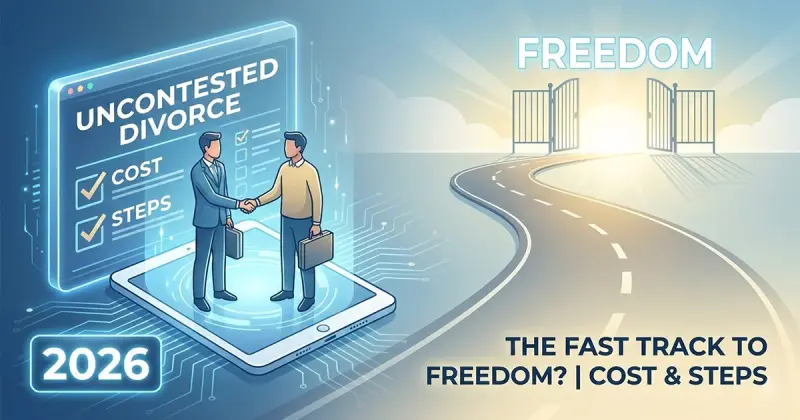
Think of an uncontested divorce as a "peace treaty" signed before the war even begins.
In a contested divorce, spouses fight over things like who gets the house, who the kids live with, or how much money one person pays the other. A judge has to listen to arguments and make the final decision.
In an uncontested divorce, you and your spouse agree on all the major issues before you go to court. You work it out at the kitchen table, not the witness stand. Because you agree on everything, the court simply reviews your agreement and stamps it "Approved."
Statistics show that in 2026, over 95% of divorces in the U.S. are uncontested. Why? Because it saves time, money, and heartache.
Why is "Uncontested" Trending in 2026?
According to Google Trends data from early 2026, searches for "fast divorce" and "amicable separation" spike every January. This is often called "Divorce Month," where people make New Year's resolutions to fix their unhappy lives.
But 2026 is different from previous years for two big reasons: Inflation and Artificial Intelligence (AI).
-
The Money Factor: Life is expensive. Most people cannot afford the average cost of a contested divorce, which can run over $12,900. An uncontested divorce is much cheaper, averaging around $4,100—and often much less if you do it yourself.
-
** The AI Revolution:** In 2026, you don't always need a lawyer to write complicated legal letters. New AI tools help couples draft agreements and even check their text messages to make sure they aren't using "fighting words".
The Step-by-Step Process (The Fast Track)
While every state has slightly different rules, the "Fast Track" generally looks like this:
Step 1: The "Kitchen Table" Talk
This is the hardest part. You and your spouse must agree on everything.
-
Assets: Who keeps the house? The car? The dog?
-
Debts: Who pays off the credit cards and student loans?
-
Kids: Where do they sleep on weekends? Who pays for braces?
-
Alimony: Will one person pay the other for support?
Step 2: File the Paperwork
One person (the Petitioner) files a form called a "Complaint" or "Petition for Divorce" with the local court. In 2026, many states allow you to do this completely online (E-filing), saving you a trip to the courthouse.
Step 3: Service (or Waiver)
The other spouse (the Respondent) usually has to be officially handed the papers. However, in an uncontested divorce, the other spouse can sign a "Waiver of Service." This tells the court, "I know about the divorce, and I don't need a sheriff to hand me papers." This saves time and money.
Step 4: The Waiting Game
Even if you agree today, you can't be divorced tomorrow. Most states have a mandatory "cooling-off period."
Step 5: The Final Decree
In many uncontested cases, you might not even have to see a judge. You submit your signed agreement, and the judge signs the "Final Decree of Divorce." You are officially single.
How Much Does It Really Cost?
One of the biggest questions people search for is "cheap divorce." Here is the reality of pricing in 2026:
Top Online Services in 2026: Reviews suggest that services like Divorce.com and 3StepDivorce are popular because they offer payment plans and "guarantees" that the court will accept your forms.
The Role of Technology: AI and Apps
In 2026, technology is your best friend during a divorce.
-
AI Drafting: Tools like ChatGPT or specialized legal AI can help you understand confusing legal words like "indemnification" or "equitable distribution."
-
Co-Parenting Apps: Apps like OurFamilyWizard now use AI called "ToneMeter." If you try to send an angry message to your ex, the app warns you: "This sounds aggressive. Do you want to rephrase?" This keeps arguments from exploding and ruining your uncontested status.
-
Online Dispute Resolution (ODR): Some courts now have online systems where you can negotiate small disagreements without ever hiring a lawyer.
Is the "Fast Track" Right for You? (A Checklist)
Just because you want a fast divorce doesn't mean you qualify for one. An uncontested divorce is NOT for you if:
-
You suspect your spouse is hiding money or cryptocurrency.
-
There is a history of domestic violence or abuse.
-
You cannot agree on custody of the children.
-
One spouse refuses to sign the papers.
If you checked any of those boxes, you might need a lawyer and a traditional process to protect your rights.
Conclusion
The "uncontested divorce" is the modern way to handle a breakup. It treats divorce as a legal problem to be solved, not a battle to be won. By using the tools available in 2026—from online filing services to co-parenting apps—you can save thousands of dollars and months of stress.
Remember, the goal isn't just to get divorced quickly; it's to build a stable foundation for your new life. If you and your spouse can work together one last time to sign that agreement, you really are on the fast track to freedom.