
10 min read
The Colorado AI Act is Live (Feb 2026): Is Your Hiring Software Breaking the Law?
The Colorado AI Act is live (Feb 2026). Is your hiring software compliant? Learn the new rules on algorithmic bias and how to avoid cos...
Was your name released in the Jan 30 Epstein files? Don't panic. Learn your rights under Canadian defamation law and how to protect your reputation in 2026.

It’s been a chaotic few days since January 30, 2026. If you are a high-net-worth individual, a business executive, or a public figure, your phone might be blowing up. The U.S. Department of Justice just released 3.5 million pages of documents related to Jeffrey Epstein and Ghislaine Maxwell.
If you were named, you are likely feeling a mix of shock and fear. But take a deep breath. Being named in these files does not mean you committed a crime. In fact, thousands of people listed were just "associates"—people who flew on a plane, attended a science dinner, or sent an email years ago.
However, the internet doesn't always care about context. In the "court of public opinion," people often shoot first and ask questions later. If you are facing public shaming or are worried about your business reputation, you need to know where you stand.
This guide is written for you. We will break down your legal rights in Canada and show you exactly how to fix your Google results, all in simple terms.
First, let’s clear the air. The Epstein Files Transparency Act forced the release of these documents. The government didn't filter the names to protect innocent people. As Deputy Attorney General Todd Blanche said, "We did not protect—or not protect—anybody".
This means a Nobel Prize-winning scientist discussing physics in an email is released in the same data dump as a co-conspirator. The problem you are facing is called "Stigma Contagion." It’s when people assume you are guilty just because you were near someone guilty.
But here is the good news: In Canada, the law protects your reputation much more strictly than in the United States.
In the US, it is very hard for public figures to sue for defamation because of "Free Speech" laws. In Canada, the balance tips in your favor. If someone writes something about you that harms your reputation, the law often presumes the statement is false until they prove it’s true.
Here are three real-life scenarios to help you understand how Canadian law works in 2026.
The Situation: A blogger in California writes a post titled "The Epstein Traffickers," listing your name just because you were on a flight log in 2010. The Problem: The blogger is in the US, but you are in Vancouver. The Law: You can sue them in Canada. Real-Life Precedent: Giustra v. Twitter. A few years ago, a Canadian businessman named Frank Giustra sued Twitter in British Columbia over mean tweets. Twitter said, "We are an American company, you can't sue us here." The BC court disagreed. They ruled that because the tweets were read by people in BC and harmed his reputation in BC, the Canadian court had jurisdiction. What this means for you: You don't have to fly to California to fight this. You can file a defamation claim right here at home.
The Situation: A TikTok user makes a video saying, "Everyone on this list is a criminal!" and flashes the entire list of names, including yours. The Law: This is trickier. Canadian law looks at "Group Defamation." Real-Life Precedent: Bou Malhab v. Diffusion Métromédia. In this famous case, a radio host made racist comments about taxi drivers. The drivers tried to sue as a group. The Supreme Court said no, because the group was too big and the insult didn't hurt each specific driver individually. What this means for you: If someone insults the entire list of 1,000 people, it might be hard to sue. But, if they zoom in on your name specifically and accuse you of a crime, that is personal defamation, and you can take action.
The Situation: You aren't being attacked by a blogger, but the actual court documents are ranking #1 on Google for your name. The Law: Can you delete them? Real-Life Precedent: Google v. Equustek. In this case, the Canadian Supreme Court ordered Google to de-index (hide) search results globally to stop the sale of fake goods. What this means for you: While you usually can't delete official court records (because they are public facts), you can use this precedent to ask Google to remove other sites—like harassment forums or extortion sites—that are using those documents to attack you illegally.
Suing people takes years. You need your reputation back now.
In 2026, we don't just "push down" bad links. We use something called Entity SEO.
Think of Google as a giant librarian. This librarian has a card catalog for every person on earth. This is called the "Knowledge Panel". Right now, the librarian has a sticky note on your card that says "Epstein Associate." Your goal is to give the librarian so many new, better sticky notes that the old one gets covered up.
How to do it:
Claim Your Panel: You need to prove to Google you are who you say you are. Once you "claim" your Knowledge Panel, you can suggest changes to your bio.
Flood the Zone: Google's AI loves "fresh" information. If you sit silently, the Epstein news stays at the top. You need to publish articles, press releases, and social media posts about your business, your charity work, or your hobbies.
Don't "Streisand" Yourself: The "Streisand Effect" is when you try to censor something and end up making it 10 times more popular. If you sue a tiny blogger, the news headline will be "Millionaire Sues Over Epstein Link." That headline is often worse than the blog post itself! Sometimes, burying the news with positive content is smarter than fighting it in court.
Should you call a lawyer or a PR team? Here is a breakdown to help you decide.
| Feature | Defamation Lawsuit (Canada) | Reputation Management (SEO/PR) |
| Primary Goal | Win in court and get money damages. | Clean up Google search results. |
| Public Visibility | High. Lawsuits are public records. | Low. Work is done quietly behind the scenes. |
| Time to Fix |
2 to 5 Years. |
3 to 6 Months. |
| Cost |
High ($50k - $200k+). |
Moderate ($3k - $10k/month). |
| Best For | Removing specific lies from one person. | Fixing your overall image online. |
Being named in the Jan 30 release feels like a nightmare, but it is a manageable crisis. You have strong legal rights in Canada, specifically the ability to sue in your home province thanks to the Giustra precedent. But remember, the court of law moves slower than the internet.
Your best defense is a good offense. By using modern 2026 SEO strategies to build your own narrative, you can ensure that "Epstein Associate" is just a footnote in your life story, not the headline.
Q1: Can I sue the US government for releasing my name? Answer: No. The release was required by a law called the Epstein Files Transparency Act. You cannot sue the government for following the law.
Q2: Will these search results go away on their own? Answer: Eventually, yes, but it could take years. Google prioritizes "fresh" news. If you don't create new content to replace it, the "Epstein" articles will stay at the top of your search results for a long time.
Q3: Is it true that "associates" are being charged with crimes? Answer: No. Being an "associate" just means you knew him or met him. The vast majority of people named in these files are not accused of any crime. The release is about transparency, not criminal charges.
Q4: Can I use the "Right to Be Forgotten" to delete this? Answer: Canada has some "Right to Be Forgotten" protections, but they are limited. You usually cannot delete accurate court records. However, you can ask Google to de-index sites that are using your name to harass you or share your private contact info.
Q5: What if someone posts my picture with a nasty caption? Answer: That is likely defamation by innuendo. Even if the picture is real, if the caption implies you are a criminal when you aren't, you can take legal action.





The Colorado AI Act is live (Feb 2026). Is your hiring software compliant? Learn the new rules on algorithmic bias and how to avoid cos...

Facing a "Gray Divorce" in Oklahoma? Learn how to protect your retirement assets after 50 and navigate the legal challenges of late-lif...

Hit by an Amazon or FedEx van in Texas? Discover who is liable in the e-commerce boom. Learn your legal rights and how to pursue a clai...
Injured on an icy Georgia sidewalk? Find out who is liable. Our legal guide explains premises liability rules for business owners, land...
How much is a divorce in California? Get a 2026 breakdown of attorney fees, court filing costs, and expenses for contested vs. uncontes...
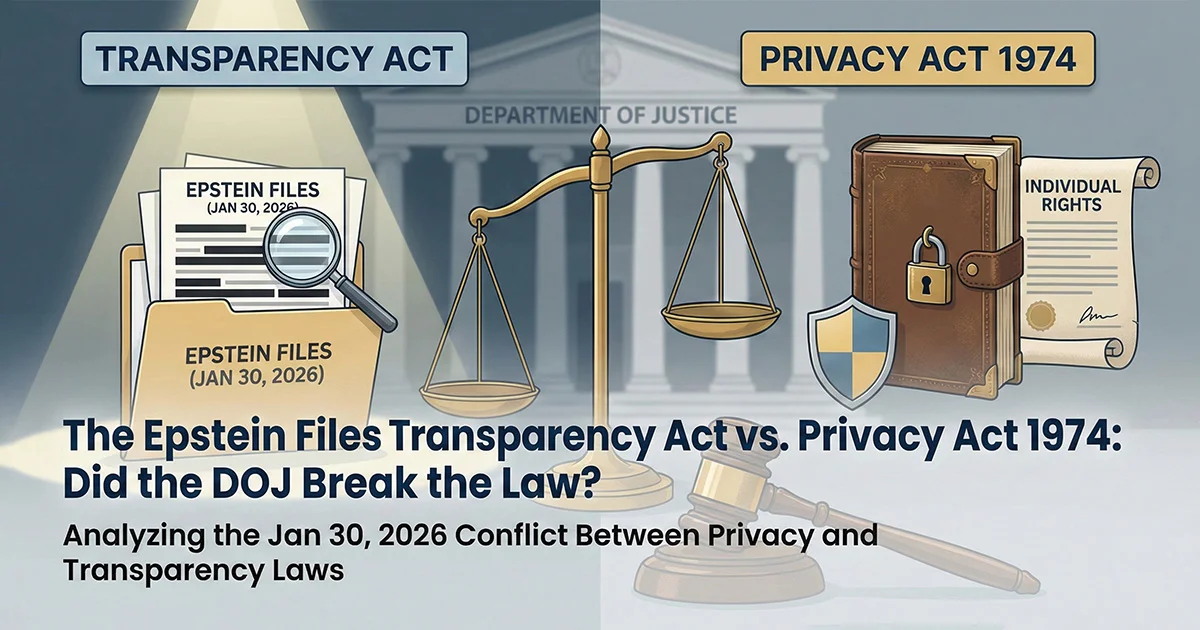
The Jan 30, 2026 Epstein release sparked a legal war. Did the DOJ violate the Privacy Act of 1974 by releasing names of innocent people...
Legal Disclaimer: Best Attorney USA is an independent legal directory and information resource. We are not a law firm, and we do not provide legal advice or legal representation. The information on this website should not be taken as a substitute for professional legal counsel.
Review Policy: Attorney reviews and ratings displayed on this site are strictly based on visitor feedback and user-generated content. Best Attorney USA expressly disclaims any liability for the accuracy, completeness, or legality of reviews posted by third parties.